CharvIQ AI: What It Is, How It Works, and Why It Matters: Artificial Intelligence Agents in the Top 10 Industries
AI Tools' Function in Creating SEO-Optimized Content
There have always been aspects of both science and art in SEO. Until recently, content producers had to rely on a laborious trial-and-error approach, gut instinct, and keyword research to get their content to rank on search results. These days, artificial intelligence has entered the scene and completely altered the process of producing material that is optimized for search engines. AI tools are now necessary allies for marketers, bloggers, and companies looking to thrive in a crowded and increasingly competitive digital environment. What is CharvIQ AI and how is it used before submitting an application? Think about Masterclass Space.
What role do AI tools play in producing SEO-focused content, and why are they so successful at it? So, let's do it in a way that sounds human rather than computer-generated.
What Is Intelligent Content in the Era of AI-Powered SEO?
There is much more to SEO content than just putting some keywords in a piece of writing and hoping for the best. Search intent, topical authority, user experience, readability and usability, and relevancy are the main focuses of modern SEO. Google and other search engines are progressively favoring user-serving material—that is, content that genuinely aids someone, wisely responds to a query, and maintains the reader's interest.
AI tools examine data from almost anywhere in the globe, including search engines, competitors, and user behavior patterns. They provide content producers with information on what users actually want, how they search, and what content does well. Instead of speculating about what could work, departments can utilize AI to provide them with statistics about what will work at each level of content creation!
AI-Powered Keyword Research and Search Intent Analysis
In the past, time-consuming spreadsheets and manual methods were used for keyword research. considerably if those tools were still available, AI has made keyword research considerably more sophisticated. Modern AI techniques examine the search intent concealed behind keywords rather than searching for keywords with high search volumes.
For example, it can distinguish between informational, transactional, and navigational keywords. Content that is in line with search intent will rank significantly higher, therefore this is crucial. AI arranges educational resources for things that users require guidance on. AI nudges us in the direction of copy that is focused on getting people to buy a product.
AI technologies recognize semantic variations and long-tail keywords. By providing search engines with the context of your material, these related terms enhance its relevance and comprehensiveness. AI helps you create topic clusters that improve your topical authority rather than just keywords.
AI-Powered Topic Ideation and Content Planning
One of the hardest things for content providers is deciding what to write about next. Here, the AI technologies demonstrate their value by examining popular subjects, rival material, and content gaps in your area.
AI searches the top-ranked pages to identify unanswered questions, missing subtopics, and ways in which your content might add value to the existing lines. This process is similar to that of a quality content audit. As a result, editorial calendars and content strategies become more sophisticated and satisfy the needs of both actual people and search engines.
AI eliminates guessing but does not replace creativity. This gives you access to a real road map where you base your ideas on what PEOPLE want to read rather than just what YOU want to write.
Improving Readability and Content Quality
SEO-focused content should be legible and engaging. AI writing tools let you reword your sentences to improve grammar, tone, and sentence structures while also making your writing more understandable. This makes it much easier for them to separate larger paragraphs, suggest simpler language, and improve overall flow.
Numerous AI systems also offer recommendations for content improvement based on readability ratings and target audience considerations. AI helps to improve the phrasing regardless of whether your audience consists of industry experts or novices.
Most significantly, AI can guarantee that every web page has the same tone and style. Maintaining consistency improves user experience, which indirectly improves SEO by increasing time on page and reducing bounces.
Simplified On-Page SEO Optimization
On-Page SEO → You concentrate on improving in-page elements such as content organization, internal links, headings, and meta descriptions. AI tools optimize and automate these components with the highest level of precision.
AI, for example, finds SEO-friendly headings, checks keywords and places them where they belong without over-optimizing your text, and recommends internal links to improve the structure of your website. It also generates captivating meta titles and descriptions that boost SERP click-through rates.
This frees up content creators to spend more time telling stories and creating value rather than worrying about all of these technical things.
AI and Customized Content
Because it closely reflects user intent, personalized content is ranked higher in search results. To make sure that material is tailored for particular audiences, artificial intelligence algorithms monitor user behavior, demographics, and engagement levels.
The length, tone, examples, and even structure may be affected by this customisation. When material feels "tailored to their needs," users read it for longer, interact with it more frequently, and are more likely to share it. An additional favorable indication to search engines that supports SEO performance is higher involvement.
How to Increase Content Production Without Reducing Quality
Scalability is the most valuable feature of AI tools. The fact that most firms struggle to consistently provide high-quality content is one of the main causes of this discrepancy. AI aids by streamlining procedures, speeding up research, and improving drafts.
But balance is crucial. The ultimate definition of the best SEO content is human-AI collaboration. Humans provide emotion, storytelling, and real-world experience, while AI adds data, structure, and efficiency.
When applied properly, AI allows teams to produce material at an exponential rate without compromising originality or substance.
AI for SEO Content: Ethical Use of the Trend
Although AI tools are powerful, we must utilize them sensibly. Instead of thousands of poorly written, mass-produced articles, search engines prefer to provide users with exceptional, original material. Without human editing, information might quickly come across as unoriginal and bland.
AI should have a supporting function rather than a leading one [throwback]; yet, human moderation ensures accurate information, emotional connection, and moral content practices. This is closely related to the SEO principles that news organizations have prioritized in order to appeal to Google: E-E-A-T (experience, expertise, authority, and trustworthiness).
What role will AI play in SEO content in the future?
AI will play a bigger part in SEO. Future technologies will likely offer more customisation options, real-time optimization, and predictive analytics. As search engines evolve, AI will let authors quickly adjust to new trends and algorithmic changes.
Instead of being afraid of AI, content producers should begin to view it as a clever ally in content planning. People that learn how to collaborate with AI tools will have a big edge in terms of visibility, productivity, and long-term value.
The Top 10 Industries Currently Using AI Agents to Transform
The increasing acceptance of AI has resulted in significant changes to traditional corporate operations, particularly in terms of automation. More than 40% of enterprise-scale companies have incorporated AI into their operations, according to an IBM survey. It's interesting to note that the successful industries' AI initiatives have encouraged numerous businesses to adopt AI. Businesses can use AI in many different ways, such as enhancing customer service or automating IT and business processes. Artificial intelligence is a strategic partner that can help businesses across a range of industries realize the possibilities of automation. Let's look into the industries that use artificial intelligence to find out more about how businesses in various sectors have been using it.
AI agents: what are they?
Artificial intelligence agents are machines that can make decisions and take action without much help from people. They use external tools and technology like natural language processing to gather, process, and act upon data.
Think of them as diligent employees who are never bored at work. They can operate independently once you have given them the required information and trained or configured them. They are incredibly productive and don't need breaks like human workers do.
Artificial Intelligence-Related Industries
Medical care
The healthcare industry was one of the first industries to adopt AI. In fact, it is one of the major businesses using AI to achieve potential advancements that might have taken more time. The main benefit of AI in healthcare is that it guarantees faster and more accurate diagnosis. Artificial intelligence-based systems can help tailor treatments to each patient's needs and preferences.
AI may help companies in the healthcare sector overcome administrative obstacles. AI can help reduce errors and improve patient care by addressing a number of pressing challenges.
Money
Another well-known industry that has effectively used AI is the finance sector. Banking and financial services companies can employ AI to improve fraud detection. One of the best examples of AI applications in finance is the optimization of trading activity using algorithmic trading.
The potential of chatbots to enhance customer service was also revealed by an analysis of AI's uses in industries like banking. AI chatbots can help improve the quality of customer support by responding to frequently asked consumer questions. Artificial intelligence can enhance both security and customer pleasure by proactively identifying dangers.
Learning
Artificial intelligence has the potential to significantly advance education through personalized learning experiences for students. Tutors can get the greatest results by using AI tools for automated grading and learning valuable information from data analytics. The two most important outcomes of using AI in education are better learning outcomes and higher student engagement.
Production
The top industries utilizing AI would have to include manufacturing. Artificial intelligence may help the industry in two areas: quality control and predictive maintenance. By applying AI technologies to identify maintenance and repair needs, manufacturing operations may save costs and downtime. Making the most of AI in supply chain optimization can also greatly enhance product quality.
Retail
Additionally, the retail and e-commerce industries have used AI in a variety of ways to improve the customer experience. Retail businesses can use AI to improve their targeted marketing campaigns and offer customized recommendations; AI can help retail inventory management become more efficient, which can help with sales management; and the application of AI to personalize the consumer experience may result in increases in customer satisfaction.
Promotion
Artificial intelligence has revolutionized the marketing sector in addition to its numerous potential advantages. Actually, when it comes to marketing with a range of AI applications, the growth of the AI industry has been the most notable. AI can help with both accurate client segmentation and automated content creation. Artificial intelligence may help marketing professionals monitor campaigns, analyze performance indicators, and improve campaign efficiency and return on investment.
Human Resources
The HR division of any company could also benefit from AI's capabilities. AI can speed up the hiring process and assist HR managers guarantee more engagement. AI can aid in the creation of tailored training plans that would boost employee satisfaction and output.
Amusement
The entertainment industry's top AI adopters also draw attention to a fascinating feature of the technology. The majority of AI applications in the entertainment industry concentrate on audience analysis and content creation. Artificial intelligence is frequently used to produce complex special effects and improve the caliber of video production. AI's greatest contribution to the entertainment industry is its ability to stimulate innovation.
Property
Artificial intelligence is having a major impact on the real estate industry. Real estate companies can use AI to perform in-depth market research and assess properties faster and more precisely. Chatbots are used to provide customers with solutions to the most common questions in the real estate sector. Artificial intelligence applications have the potential to improve investment decisions and boost consumer satisfaction.
CharvIQ AI: What is it?
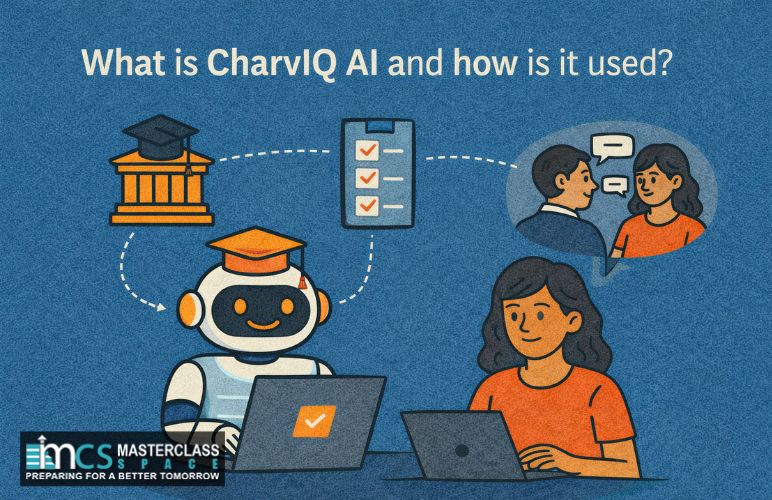
CharvIQ AI is an AI companion designed to make education more enjoyable for kids by tailoring it to their own learning preferences. The Sanskrit word "Charvik" (clever and bright) is the source of the name. Its developers produced it and presented it at the GESS Dubai Edtech Fair in 2025.
How Does It Get Used?
As a teaching tool, CharvIQ AI helps students get ready for both academic performance and entrance to prestigious universities. Among its primary uses and applications are:
- Personalized Learning: The AI recognizes each child's unique learning style and modifies instructional materials and interactions accordingly, increasing the effectiveness of learning.
- Knowledge Companion: It serves as an AI companion to offer advice and knowledge in a fun and interactive way.
- University Preparation: By offering specialized support and preparation, the product is specifically designed to make the process easier for families hoping to send their children to the top colleges worldwide.
- Engagement: It is intended to turn learning into a "joyful adventure" as opposed to a chore, which probably entails gamification and interactive elements.
In conclusion
With the advent of AI tools, SEO content design, writing, and optimization have all undergone significant change. AI makes the entire process simple and effective, including keyword research and analysis of search intent, content optimization for voices across sites, and scalability. Nevertheless, human creativity, empathy, and storytelling are still necessary for the best material.
The AI-powered consulting app Charviqai.com, which debuted at GESS Dubai in 2025, is a significant advancement in Before You Apply to a CharvIQ AI.
Visit www.masterclassspace.com to learn more about Before You: What is CharvIQ AI and how is it used? What is CharvIQ AI and how is it used before submitting an application? Think about Masterclass Space.