How Many AP Classes Should You Take for Top College Admissions?

AP classes are now one of the most significant academic predictors of competitive college admissions. Students who want to join selective colleges usually pose a similar question: how many AP courses should they take to make a difference in their application? Although a common misunderstanding many students have is that the amount of AP classes a student takes can only promise him or her entry into a good college, this is not the case; it is a lot more strategic.
Colleges assess the students on the basis of the rigidity of their study program, their achievement in those courses, and the relevance of their studies to their academic interests. Enrollment in AP courses demonstrates that a high school student is ready to be challenged with college-level content. The right amount of AP classes, however, is based on several things, such as the academic prowess of the student, and how many AP classes are provided in the school of their choice, their major in college and their capability of keeping their GPA high, in addition to extracurricular activities.
An intelligent approach is much more important than just piling as many AP courses as you can. Students who strategically plan their AP work over four years in high school tend to build more sturdy and well-rounded college applications.
What Are AP Classes and Why Do Colleges Value Them?
AP courses are high school courses based on a standardized curriculum and are of college level. Students are also given AP exams at the end of the academic year, scoring them on a scale of 1 to 5. High scores on these exams can be used to earn credit or an advanced place in many colleges.
In the case of admissions officers, AP courses are an indicator of academic rigour. By the time they go through the applications, they would prefer to notice that the students have tested themselves with the hardest courses that can be offered in their school. One of the ways through which a student can prove to be ready to take the intellectual challenges of university work is through his or her transcript, which is full of tough coursework.
Academic interest and devotion to learning are other reasons why colleges are attracted to AP classes. Learners who take up hard courses tend to have better analysis skills, study habits, and discipline. These traits are good in the college setting.
How Many AP Classes Do Top Universities Expect?
The most significant myth of college admissions is that there is an absolute number of AP courses needed in order to achieve admission to the best colleges. The fact is that there is no strict requirement. The admissions officers will assess the students against the background of their own high school.
The important thing is whether a student has exploited rigorous opportunities presented to him or her. When a high school has fifteen courses that are AP, and a student only takes one course, that may not seem rigorous. Conversely, when a school has five courses on AP, and a student completes four of them, it is a sign of good academic motivation.
In the case of highly selective universities, high numbers of successful applicants enrol in between eight to twelve AP courses throughout their high school life. This typically involves taking a couple of more advanced courses during the second year and more in the third and fourth years. These figures must be considered as an overall pattern, not as rigorous rules, however.
The balance of the AP coursework and other parts of the application is also factored by admissions officers. Students who have a good grade and are engaged in meaningful extracurricular activities, research, or leadership activities tend to have a better overall profile.
Recommended Number of AP Classes by College Competitiveness
Various colleges vary in expectations relating to academic rigour. Although there is no specific regulation regarding how many AP classes students should take, it is possible to think about the overall expectations regarding the varying degrees of college competitiveness so that students can plan high-school coursework in a more proactive way. Students who apply to universities with very high selectivity usually have more demanding schedules, whereas those who are planning to apply to colleges with moderate selectivity might not have to take many more advanced courses.
The point is that students have to show intellectual interest and academic devotion with good grades. Colleges assess how well students used the opportunities they had and how their academic decisions were in line with their interests and long-term objectives.
Ivy League and Top 20 Universities
Students who want to join an Ivy League school or any other top twenty universities usually have a large number of AP classes during high school. A good number of competitive applicants finish between six and twelve AP courses before graduation. These classes usually take place in all three years, in sophomore, junior, and senior years, but the heaviest academic timetables are seen in the last two years of high school.
The admissions officers in these universities pay attention to the selection of difficult subjects that students chose which match their areas of interest. As an example, students who are interested in engineering can take AP Calculus and AP Physics, whereas those who want to major in humanities can take courses in AP English and history. The rigorous coursework and high grades will aid in showing preparedness to the high-stress academic environment of high-end universities.
Competitive State Universities
When students are applying to competitive state universities, they often seek a balanced academic schedule, carefully incorporating several AP courses, but not always an equal amount of intensity as Ivy League applicants. Students aiming at such institutions usually take approximately four or six AP courses over the years of high school.
This level of academic rigour still demonstrates strong preparation for college-level learning. State university admissions officers usually seek students who have good grades but enrol in harder courses. A well-balanced program enables students to excel in school and also engage themselves in extra-curricular programs, sports, leadership or community projects.
Moderately Selective Colleges
In the case of moderately selective colleges, students tend to require taking fewer AP classes to make their application competitive. Demonstrating academic initiative and the ability to work with difficult material can be done even by completing two to four AP courses in high school.
In such instances, the colleges are more concerned with overall academic performance and consistency. Good grades, substantial extracurricular activities and reflective personal essays frequently contribute equally to the admissions process. Even a lesser amount of AP classes may be able to make students shine through their commitment to their interests and their strong academic profile.
Factors That Determine How Many AP Classes You Should Take
The number of AP classes that one takes should be carefully planned and evaluated. The academic journey of each student is unique, and the most appropriate approach is a complex of individual skills, opportunities available in school and long-term aspirations. Instead of just trying to do as many advanced courses as possible, students need to develop a schedule that will push them but not overwhelm them and still enable them to perform very well.
This decision may depend on several factors, such as the amount of AP classes a school has to offer, the academic capabilities of the student and what major they intend to pursue in college. The factors are to be taken into account to help students create a balanced and strategic academic plan.
Your High School’s Course Offerings
AP classes are not equally available in all high schools. Other schools might offer a broad selection of high-level courses, but only a few. Colleges are aware of such differences, and they measure students on the basis of the opportunities offered in their respective schools.
The admissions officers usually examine the school profile sent with an application. This writing explains the available academic courses and how students typically organise their schedules. Consequently, students will not be punished when their school has fewer AP classes. Rather, colleges merely demand that students pursue the most difficult courses available to them.
Your Academic Strength and Workload Capacity
AP courses involve a lot of commitment that entails a lot of reading, homework, and studying for exams. Students who overstep advanced classes might not cope with the load, hence causing stress and poor grades.
Students should also be very truthful about their strengths in academics and time management. A manageable timetable enables the students to perform well in their classes as well as balancing in their school life at large. Good results in a moderate level of AP courses are much more helpful than overworking the timetable and burning out.
Your Intended College Major
The other consideration of AP classes is the major that a student plans to pursue in college. Taking up courses which can support college applications in future by reflecting intellectual focus can strengthen a college application.
As an illustration, students who want to be engineers may focus on such subjects as AP Calculus and AP Physics, and students who want to be biologists or medical workers might focus on AP Biology and AP Chemistry. AP English Literature and AP History are courses that may be selected by humanities students. Academic interests of a student are easily conveyed in coursework, which makes the student have a more cohesive and persuasive story to college admissions.
Quality vs Quantity: Why GPA Still Matters More
Most students believe that the more AP courses they attend, the better their college application will be. Nevertheless, admissions officers focus on academic work and not just the number of courses. It is not about doing as many AP courses as you can, but to excel in the courses that you do.
Those students with good grades in difficult subjects reflect their discipline and command of the subject matter. A transcript with a number of A grades in a couple of AP classes sends a strong message to colleges that the student is ready to work hard academically.
Conversely, excessive AP classes may at times result in poor grades and unjustified stress. Colleges are aware of the limits of students, and would rather expect to see a balanced academic approach. Having a great GPA in the process of undertaking tough courses and participating in significant extracurricular activities often makes the overall application more solid.
Sample AP Course Plan for High School (Grades 9–12)
Some planning of AP classes over four years of high school can allow students to balance their workload and achieve academic rigour gradually. Students will not have to learn a lot of advanced classes at once, but can enjoy a progression of learning with more difficult classes each year.
This plan will enable the students to acquire the study tactics and time management skills they will require to succeed in challenging classes. It also allows students to perform at a high standard as they await college admissions.
Freshman Year
The freshman year is typically based on academic foundations. The majority of students enrol in standard or honours courses in core subjects like mathematics, science and English. AP courses are not available to freshmen in most schools, although some schools do offer an introductory course in AP.
The reason is that this year is crucial to adapting to high school demands and becoming a good student. Setting a high GPA at a young age would help one to have a good academic history in high school.
Sophomore Year
It is a typical sophomore year when students start to take their first AP courses. Many students take one or two AP classes this year, since this will give them the chance to be in a class with higher academic rigour without being overwhelmed.
This step also enables students to learn about areas that are potentially appealing to their future studies. Passing such coursework in the sophomore year also makes students feel confident about their ability and readiness to undertake harder courses in their future high school.
Junior Year
Usually, the most crucial academic year in college admissions is junior year. Students are able to maintain a rigorous schedule, taking three or four AP classes in this period.
Colleges usually give a lot of attention to the grades in the junior years since they are the most current full document of grades when determining admission. Good results in several AP courses this year can go a long way in augmenting the application of a student.
Senior Year
Senior year represents a chance to keep on proving academic rigour. Various students are enrolling in another course of three or four AP courses as they complete their college applications.
Although the admissions office might mainly rely on previous transcripts, colleges still require students to continue to excel in their final year in high school. The commitment to learning and intellectual interest is further demonstrated in senior year AP courses.

Mistakes Students Make When Choosing AP Classes
The process of selecting AP classes needs a lot of planning, but a lot of students commit preventable errors during their selection. Students may not emphasise the long-term academic development, but rather put in different types of priorities, such as appearances or doing as others are doing. These choices may cause such unwarranted academic stress and undermine overall performance. Being aware of these pitfalls may enable students to form a more balanced and thoughtful course map in high school.
Taking AP Classes Only to Impress Colleges
Taking AP courses just to impress with a transcript is one of the biggest errors that students make. Some people think that the more AP courses an individual has had, the better their college application will be. The admissions officers do not consider the applications based on the number of advanced courses alone. They are more concerned with the performance of the students in such classes and the course suitability.
For example, students looking for specialised academic support often research programs such as Best AP Physics Classes in Princeton, Best AP Physics Classes in New York City, or Best AP Physics Classes in Philadelphia to build stronger conceptual understanding in demanding subjects.
Ignoring Course Alignment with Intended Major
The second mistake that students make is to enrol in AP courses without considering their connections with their future academic goals. To provide an example, a student planning to attend college to study engineering must ensure that he or she takes up courses such as AP Calculus or AP Physics. Similarly, students interested in the humanities can take better advantage of AP English Literature or AP History.
Overloading Schedule and Harming GPA
Other students are trying to take as many AP courses as possible, believing that the extra work would strengthen their application. The fact is that such a strategy can backfire when it leads to poor grades or unhealthy stress. Taking some challenging courses at a time requires excellent study habits and time management.
Not Balancing Academics with Extracurricular Impact
The other mistake is focusing on academics and neglecting extracurricular activities. Even though AP courses represent academic rigour, colleges also value leadership, innovation, and real-life experience, as well. Sports, research projects, volunteering or student leadership activities will help students to gain valuable skills outside the classroom.
Final Thoughts: Finding the Right AP Balance
Some students have an ideal number of AP classes. It relies on individual academic capability, the number of high-level classes taught in a school, and the intended college aspirations of a student. Students should not aim for a particular number but instead develop a challenging but attainable academic program.
The strongest college applicants challenge themselves while maintaining excellent grades and engage in meaningful extracurricular activities. By taking courses that fit their interests and strengths, students are able to create a rounded-out academic portrait, which tells of both hard work and interest. An intelligent approach toward AP classes eventually enables students to get ready not only for college acceptance but also for eventual long-term academic achievement.
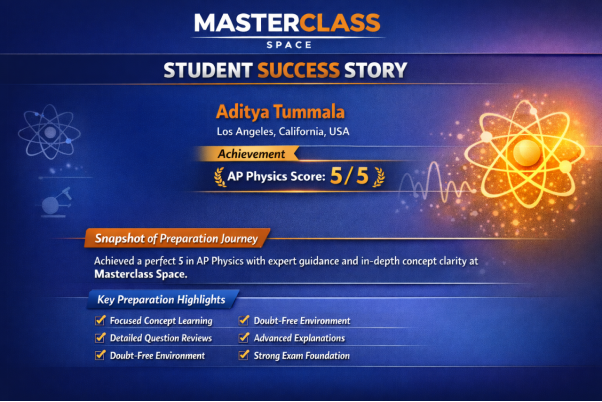
You can join our Masterclass Space AP Series for the best results and get further details on the Best AP Physics Classes in Princeton at www.masterclassspace.com.