
Getting admission to Oxford
University is highly competitive, but the process becomes much
easier to understand once you break it into clear steps. For 2027 entry,
students need to choose the right Oxford course, meet its academic
requirements, submit UCAS by 15 October 2026, complete
any required admissions test or written work, and attend an online
interview if shortlisted. Oxford reviews the full academic application
rather than relying on one score alone. The undergraduate application
process is the same for students worldwide, although accepted
qualifications and English language requirements can differ by
country.
Oxford
University Admissions 2027 at a Glance
| Admission Factor | 2027 Entry |
|---|---|
| Application system | UCAS |
| Oxford application deadline | 15 October 2026, 6pm UK time |
| Oxford courses you can apply for | One |
| Oxford and Cambridge in same cycle | Not permitted |
| College choice | Choose a college or make an open application |
| Admissions tests | Required for selected courses |
| Written work | Required for selected courses |
| Written work deadline | 10 November 2026 |
| Interviews | Online in December 2026 |
| Admission decision | 12 January 2027 |
| International applicants | Same main application process |
Oxford has an earlier admissions cycle than most UK universities, so
students benefit from beginning their course research, test preparation
and UCAS planning several months before October.
What
Does It Take to Build a Strong Oxford Application?
A strong Oxford
application is not about trying to create a perfect profile. It
is about showing that you are academically prepared for the subject you
want to study and genuinely interested in exploring it at a deeper
level.
Oxford looks at the different parts of an application together.
Depending on the course, these can include academic results, predicted
grades, the UCAS application, admissions tests, written work and
interviews. The aim is to understand whether the student has the
academic ability, curiosity and potential to succeed in Oxford’s
tutorial based learning environment.
Students should therefore focus on the parts they can control:
Choose a course you genuinely want to study. Oxford
courses are academically focused, so the subject should be something you
are comfortable exploring in depth for several years.
Build strong academic foundations. Your current
subjects and grades should prepare you for the course requirements.
Explore the subject beyond the classroom. Reading,
projects, lectures, competitions, research, podcasts or other subject
related experiences can help you develop deeper understanding.
Prepare early for any required test. Admission test
preparation is easier when it is planned alongside schoolwork rather
than left until the final weeks.
Use the personal statement to explain your thinking.
Oxford is more interested in how you engaged with an academic experience
than in a long list of achievements.
Treat the interview as an academic conversation. It
is designed to understand how you think, not to test whether you have
memorised perfect answers.
Oxford receives many strong applications, but students should treat
this as context rather than as a reason not to apply. The most useful
approach is to prepare carefully and present your academic interests
clearly.
Oxford
University Entry Requirements for 2027
Oxford entry requirements depend on the course. Students should
always check the official page for their intended degree because grade
requirements, required subjects, admissions tests and written work can
differ.
Academic
Requirements
For A Level applicants, Oxford’s standard offers generally range from
AAA to A*A*A, depending on the course.
For International Baccalaureate applicants, Oxford typically requires
38, 39 or 40 points including core points, with 6s and
7s in relevant Higher Level subjects.
| Qualification | Typical Requirement |
|---|---|
| A Levels | AAA to A*A*A, depending on course |
| International Baccalaureate | 38 to 40 points including core points |
| International A Levels | Accepted grade for grade as equivalent to UK A Levels |
| Other international qualifications | Must meet Oxford’s published country specific equivalent |
Students should also check subject requirements, not
only headline grades. Courses in engineering, mathematics, medicine and
sciences often require particular school subjects.
International
Qualifications
Oxford accepts qualifications from many education systems around the
world, but its requirements vary by country.
Students should use Oxford’s official international qualifications
database to check whether their qualification is accepted and what
grades are expected. If a school leaving qualification is not accepted,
Oxford may require the student to complete an alternative recognised
qualification before applying.
This is more reliable than trying to convert national grades
independently into A Level equivalents.
English Language
Requirements
Oxford requires the higher level of English proficiency for
all undergraduate courses.
Applicants do not usually need to submit English language evidence
with the original UCAS application. If it becomes a condition of an
offer, the requirement normally needs to be met by 31
July in the year the student starts.
| English Test | Current Requirement |
|---|---|
| IELTS Academic | 7.5 overall, minimum 7.0 in each component |
| Oxford Test of English Advanced | 165 overall, minimum 155 per component |
| Cambridge C1 Advanced | 191, minimum 185 per component |
| Cambridge C2 Proficiency | 191, minimum 185 per component |
| TOEFL taken up to 20 January 2026 | 110 with Oxford’s required component scores |
Oxford currently does not accept TOEFL tests taken from 21
January 2026 onward while changes to the revised TOEFL iBT are
under review, so 2027 applicants should check the latest policy before
booking a test.
How to
Apply to Oxford University: Step by Step
Oxford’s application process is quite structured. Once students know
the order, it becomes much easier to plan.
Step 1: Choose Your
Oxford Course
Course choice comes before college choice.
You can apply for only one undergraduate course at Oxford in
a given cycle, and you cannot apply to Oxford and Cambridge in
the same year.
Students should therefore spend time reviewing:
Course content
Compulsory and optional papers
Entry requirements
Required school subjects
Admissions tests
Written work
Teaching style
Oxford courses are usually quite specialised, so the strongest
applications come from students who are genuinely interested in the
subject they choose.
Step 2: Check the
Course Requirements
Before starting the UCAS form, check whether your course
requires:
Specific grades
Particular school subjects
An accepted national or international qualification
An admissions test
Written work
English language evidence
The individual course page should be treated as the main reference
point.
Step 3:
Choose a College or Make an Open Application
Students can indicate a preferred Oxford college or submit an
open application.
An open application is allocated to a college that has received
relatively fewer applications for that course. Oxford says tutors do not
prefer direct applicants over open applicants.
Students also do not need to worry excessively about finding the
“easiest” college. All colleges use a common admissions framework, and
applicants can be reallocated.
Around one third of successful applicants receive an offer
from a college they did not originally select.
College choice is therefore better based on practical preferences
such as:
Location
Accommodation
Size
Facilities
College environment
Step 4: Complete
the UCAS Application
Oxford undergraduate applicants apply through UCAS.
For 2027 entry, the final Oxford deadline is:
15 October 2026 at 6pm UK time.
The application includes academic information, qualifications,
predicted grades where applicable, a personal statement and an academic
reference.
Oxford generally does not want applicants to send separate
certificates or transcripts with the initial UCAS application. Evidence
is normally requested later if a place is offered.
Step 5: Register Separately for the Required Admissions
Test
One practical point students should not miss is that
admissions test registration is separate from UCAS.
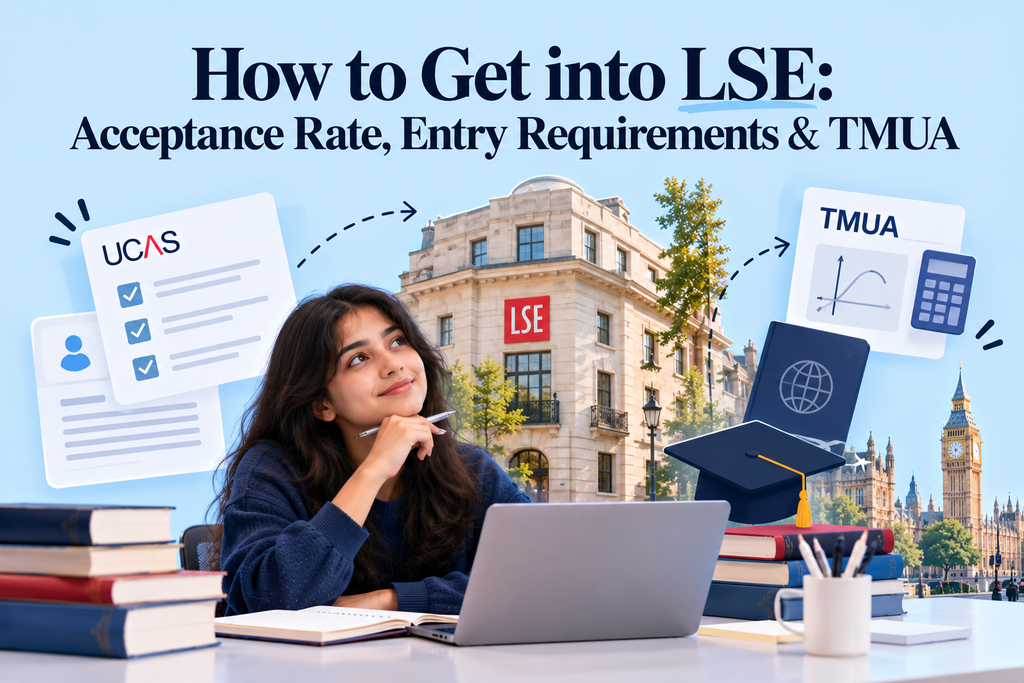
For ESAT, TMUA and TARA, students must create a UAT UK account and
book the test themselves.
For 2027 undergraduate entry:
| UAT UK Stage | Date |
|---|---|
| Registration opens | 1 June 2026 |
| Test booking opens | 20 July 2026 |
| Test booking closes | 28 September 2026 |
| Test dates | 12 to 16 October 2026 |
| Results available | 16 November 2026 |
Students applying to standard Oxford undergraduate courses that use
UAT UK must sit the October 2026 test window. (Oxford
University)
Medicine and Law follow separate UCAT and LNAT arrangements.
Step 6: Submit
Written Work if Required
Some Oxford courses require a sample of academic written work.
If your course requires it, the standard deadline for 2027 entry
is:
10 November 2026
Not every course asks for written work, so applicants should check
the course requirements before preparing anything additional.
Step
7: Attend the Oxford Interview if Shortlisted
Shortlisted applicants will have online interviews in
December 2026.
Oxford describes interviews as academic conversations similar to a
short tutorial. Students may be given an unfamiliar question, problem,
text or idea and asked to work through it.
The most useful preparation is therefore to practise:
Explaining your reasoning
Thinking aloud
Responding to new information
Developing an argument
Changing your view when new evidence appears
Students do not need rehearsed answers. The interview is designed to
explore how they think.
Step 8: Receive
Your Admission Decision
Applicants interviewed for 2027 entry will receive their Oxford
decision through UCAS on:
12 January 2027
Colleges will follow up directly after the UCAS decision.
Students receiving a conditional offer then need to meet their final
academic and any English language conditions.
Oxford
Admissions Tests for 2027 Entry
Oxford changed several of its admissions tests for 2027 entry.
Selected courses now use ESAT, TMUA or TARA through
UAT UK, while Medicine continues to use UCAT and Law continues to use
LNAT.
| Test | Courses Using It |
|---|---|
| ESAT | Biomedical Sciences, Engineering Science, Physics, Physics and Philosophy |
| TMUA | Computer Science, Mathematics and related joint courses |
| TARA | Economics and Management, PPE, Human Sciences, selected History and Psychology courses |
| UCAT | Medicine and Graduate Entry Medicine |
| LNAT | Law |
The full 2027 course list includes several joint degrees, so students
should confirm their exact test on the course page.
Not every Oxford course requires an admissions test.
Oxford UCAS
Personal Statement for 2027
The UCAS
personal statement now uses three structured
questions rather than one continuous essay, while keeping the
overall limit at 4,000 characters. Oxford does not
currently expect another format change for 2027 entry.
The questions focus on:
Why you want to study the course or subject
How your academic studies have prepared you
What you have done outside formal education that supports your
preparation
For Oxford applicants, the strongest approach is to keep the
statement academically focused.
Oxford typically recommends that around 80% of the statement
focuses on academic interests, abilities and achievements,
including relevant super curricular activities.
Students do not need a dramatic story or a long list of achievements.
Oxford explicitly advises applicants to explain what they learned from
an experience and how it developed their understanding of the
subject.
For example, instead of simply writing:
“I read several books about economics.”
A stronger approach is to explain which idea challenged your
thinking, what question it raised and what you explored next.
The UCAS statement is also seen by the other universities on your
application, so it should primarily explain why you want to
study the subject, not become a “Why Oxford?” essay.
Does Your
Oxford Course Require Written Work?
Some Oxford courses use written work to understand how a student
analyses information, develops an argument and communicates
academically.
If your course requires written work, check:
How many pieces are needed
What type of work is acceptable
Whether it must be marked by a teacher
Any word or length guidance
How the college wants it submitted
The standard deadline is 10 November 2026, although
Fine Art portfolio arrangements differ.
Students should submit genuine academic work that matches Oxford’s
instructions rather than creating a new piece simply because they think
it may appear more impressive.
Oxford
University Application Timeline for 2027 Entry
| Period | What Students Should Do |
|---|---|
| Early 2026 | Research courses and academic requirements |
| From May 2026 | Start UCAS application |
| 1 June 2026 | UAT UK registration opens |
| 20 July 2026 | UAT UK booking opens |
| Early September | UCAS applications can be submitted |
| 28 September 2026 | UAT UK booking closes |
| 12 to 16 October 2026 | Oxford UAT UK tests |
| 15 October 2026 | Oxford UCAS deadline |
| 10 November 2026 | Written work deadline where required |
| Late November to early December | Shortlisting |
| December 2026 | Online interviews |
| 12 January 2027 | Admission decisions |
| By 31 July 2027 | English condition where applicable |
| October 2027 | Course begins |
Oxford’s official admissions timeline confirms this overall
sequence.
The key advantage of starting early is that students can handle each
stage separately instead of trying to prepare tests, UCAS and written
work at the same time.
What
International Students Need to Know Before Applying to
Oxford
International students follow the same main undergraduate
admissions process as UK applicants. They use UCAS, follow the
same 15 October deadline and are assessed against the same academic
selection criteria. Oxford does not operate a general international
quota, except for Medicine.
International applicants should pay particular attention to:
Accepted qualifications: Check whether Oxford
accepts your national or international school qualification.
Grade equivalencies: Use Oxford’s own country
specific requirements instead of converting grades yourself.
Required subjects: Some courses require particular
subjects regardless of country.
Predicted grades: Students whose final results are
still pending should include predicted grades through the application
process.
English proficiency: Students who do not qualify for
an exemption must meet Oxford’s English requirement.
Oxford reports that international citizens currently make up around
20% of its undergraduate population, with students
across the University coming from more than 170 countries.
This means international students are a well established part of
Oxford’s academic community, and the application route is designed to
work across many different education systems. Many international
applicants also work with undergraduate
admission consultants to confirm qualification equivalencies and
plan each stage of the process.
Oxford
University Fees and Scholarships for International
Students
For students classified as Overseas for fee
purposes, Oxford’s confirmed undergraduate course fees for 2027 to 2028
range from:
£39,620 to £66,580 per year
The exact amount depends on the course. Clinical Medicine has
considerably higher fees during the clinical years.
Oxford estimates undergraduate living costs for 2027 to 2028 at
approximately:
£1,475 to £2,175 per month
For a nine month budget, this is approximately £13,275 to
£19,575.
Students should budget separately for visa related costs, travel and
any course specific expenses that apply to them.
Scholarships
for International Students
Oxford offers undergraduate scholarships, but availability for
international students is limited and eligibility can be very
specific.
One example is the Reach Oxford Scholarship, which
is available to eligible students from specified low income countries.
It covers course fees, a living cost grant and one return airfare per
year. Oxford expects around two to three awards
annually.
The Simon and June Li Undergraduate Scholarship is
another 2027 option for eligible students applying to qualifying three
or four year courses within Oxford’s Social Sciences Division. It covers
course fees and provides a grant towards living costs.
Several Oxford undergraduate scholarship applications for 2027 have a
deadline of 12 noon UK time on 26 January 2027.
Students should check:
Eligible countries
Eligible Oxford courses
Financial need requirements
Whether an Oxford offer is required
Separate scholarship forms
Scholarship deadlines
Scholarships can be valuable, but applicants should build a realistic
financial plan that does not depend entirely on receiving one.
How
Masterclass Space Can Support an Oxford Application
Masterclass Space’s premium
undergraduate admission consulting can help students approach
the Oxford application in a structured way, beginning with course fit
and academic preparation rather than treating admission as one final
application task. The admission
consulting process can support course and college selection,
profile development, super curricular planning and UCAS strategy.
Students can also receive guidance with the three part personal
statement and the different requirements attached to their selected
Oxford course. Applicants preparing for ESAT, TMUA, TARA or other
admissions tests can organise their preparation around the correct
timeline, while students shortlisted for interview can receive support
with academic interview preparation. International applicants can also
receive guidance on qualification equivalencies, English language
requirements and application planning. Oxford makes all admission
decisions independently, and no consultant can guarantee an offer.
Frequently Asked Questions
How do I get admission to Oxford University?
Start by choosing one Oxford course and checking its academic and subject requirements. Submit UCAS by 15 October 2026, complete the relevant admissions test and written work if required, and attend an online interview if shortlisted. Oxford reviews the different parts of the application together.
What grades should I aim for when applying to Oxford?
Oxford’s standard A Level offers range from AAA to A*A*A, while IB offers usually require 38 to 40 points including core points with relevant Higher Level grades. Exact requirements depend on the course.
Do I need a perfect academic profile to apply to Oxford?
No single score guarantees admission. Students should first make sure they meet the academic requirements and then focus on demonstrating genuine subject engagement, academic potential and preparation for the course. Oxford assesses the application as a whole.
Can international students apply to Oxford University?
Yes. International students use the same UCAS process and are assessed against the same admissions criteria. Oxford has no general international quota except for Medicine.
Which entrance exams are required for Oxford in 2027?
It depends on the course. Oxford uses ESAT, TMUA and TARA for selected programmes, UCAT for Medicine and LNAT for Law. Many courses require no admissions test.
What is the Oxford application deadline for 2027?
The undergraduate UCAS deadline is 15 October 2026 at 6pm UK time. Admissions test booking and written work have separate deadlines, so students should track the complete timeline.
Can I apply to Oxford and Cambridge in the same year?
No. Undergraduate applicants can apply to one course at Oxford, and they cannot apply to Oxford and Cambridge in the same admissions cycle.
Does choosing an Oxford college affect my chances?
Oxford uses a common admissions framework across colleges, and applicants can be reallocated between colleges. Around one third of successful students receive an offer from a college they did not originally choose.
Do extracurricular activities matter for Oxford?
They matter mainly when they demonstrate qualities relevant to the course. Oxford recommends focusing primarily on academic interests and subject related engagement rather than building a long list of unrelated activities.
What is the most important thing to remember before applying?
Students should focus on course fit, academic preparation and subject engagement. Oxford’s process has several stages, but each one is designed to help tutors understand how well prepared the student is for the course. Starting early and approaching each stage separately can make the application feel much more manageable.